
Indus Valley Civilization in Pakistan – History, Sites & Legacy
The Indus Valley Civilization (IVC)—also known as the Indus Civilization of Pakistan—is one of the earliest and most advanced ancient civilizations in human history. Flourishing from 3300–1300 BCE along the Indus River, the civilization’s heartland lies in modern-day Pakistan. Over 80% of all known IVC sites are located in Pakistan, making it the true center of this remarkable Bronze Age culture.
The civilization is famous for its urban planning, advanced drainage systems, architecture, trade links, and mysterious undeciphered script.
The Indus Valley Civilization River System
The entire civilization developed along the fertile Indus River and its tributaries:
- Indus River (main axis of civilization)
- Ravi River
- Chenab River
- Sutlej River
- Ghaggar-Hakra (ancient Sarasvati)
This vast river network supported agriculture, trade, and the growth of cities.
Major Indus Valley Civilization Sites in Pakistan
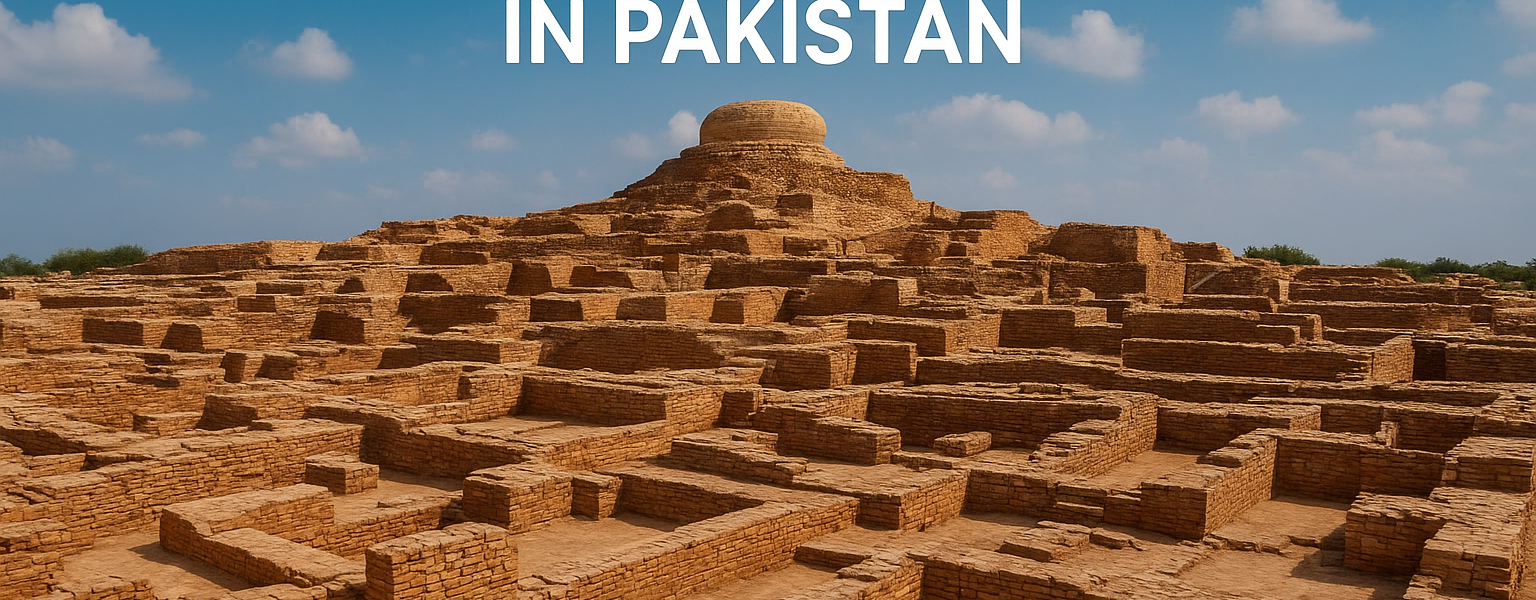
1. Mohenjo-Daro (Sindh) – The Iconic Indus Capital
The best-preserved Indus city known for the Great Bath, advanced drainage system, granaries, and a highly organized street layout.
2. Harappa (Punjab) – The Trade & Craft Hub
A major center of pottery, beads, craftsmanship, and trade. The civilization is also known as the Harappan Civilization because of this site.
3. Kot Diji (Sindh) – Pre-Harappan Fortified Town
Features one of the earliest fortification systems in South Asia, marking the transition to urban societies.
4. Mehrgarh (Balochistan) – Oldest Farming Settlement
A site dating back to 7000 BCE, considered the earliest cultural ancestor of the Indus Civilization.
5. Amri, Rehman Dheri & Jhukar (Sindh & KP)
Important sites showing early town planning, pottery development, and long-distance trade.
Culture & Achievements of the Indus Civilization
The Indus people achieved remarkable advancements:
- Grid-based urban planning
- World’s earliest underground sewage system
- Public baths and granaries
- Standardized weights & measures
- Jewelry, pottery, seals, figurines
- Peaceful society with minimal warfare evidence
Comparison: Indus Valley Civilization vs Gandhara Civilization
| Feature | Indus Valley Civilization | Gandhara Civilization |
|---|---|---|
| Time Period | 3300–1300 BCE | 6th century BCE – 11th century CE |
| Location (Pakistan) | Sindh, Punjab, Balochistan, KP | KP & Northern Pakistan |
| Culture Type | Urban Bronze Age | Buddhist/Greco-Buddhist |
| Key Sites | Mohenjo-Daro, Harappa, Mehrgarh | Taxila, Swat, Takht-i-Bahi |
| Achievements | City planning, drainage, seals | Buddhist art, sculpture |
| Writing System | Undeciphered script | Brahmi & Kharosthi |
| Religion | Unknown / proto-religious | Buddhism |
FAQ About the Indus Valley Civilization
1. Where was the Indus Valley Civilization located in Pakistan?
Most major IVC sites—including Mohenjo-Daro, Harappa, Mehrgarh, Kot Diji—are located in Sindh, Punjab, Balochistan, and Khyber Pakhtunkhwa.
2. What river did the Indus Civilization develop around?
It developed along the Indus River and its tributaries: Ravi, Sutlej, Chenab, and Ghaggar-Hakra.
3. Why is the Indus Valley Civilization important?
It was one of the earliest urban civilizations, known for advanced planning, drainage, and architecture unmatched by other Bronze Age cultures.
4. What were the major cities of the Indus Civilization?
The major cities were Mohenjo-Daro, Harappa, and Dholavira.
5. What kind of writing system did they use?
The Indus script remains undeciphered; it appears on seals and pottery.
6. Was the Indus Civilization peaceful?
Yes, archaeologists found almost no signs of warfare or weapons, suggesting a peaceful society.
7. What happened to the Indus Valley Civilization?
Possible causes include climate change, drying rivers, floods, or migration, though the exact reason remains unknown.
8. Is Mohenjo-Daro open for tourists in Pakistan?
Yes, Mohenjo-Daro is a UNESCO World Heritage Site and open for visitors throughout the year.
9. Which is the oldest site of the Indus Civilization?
Mehrgarh (7000 BCE) is one of the oldest farming settlements, predating the Indus cities.
10. How advanced was their drainage system?
The Indus drainage system was centuries ahead of its time—featuring covered drains, manholes, and sewage channels.
11. What religion did the Indus people follow?
Their religion is unknown, but statues like the “Priest King” and “Mother Goddess” suggest ritual or proto-religious practices.
12. Why is Pakistan important to Indus Valley history?
Because over 80% of all excavated sites are located within Pakistan’s current borders.
13. What materials did the Indus people trade?
They traded beads, cotton, pottery, shells, metals, and seals with Mesopotamia and Central Asia.
14. Is the Indus Civilization older than Egypt?
Yes, the earliest phases of the Indus Civilization predate or match early Egypt and Mesopotamia.
15. What were the houses like in Indus cities?
Homes were built from baked bricks, with courtyards, multiple rooms, wells, and sanitation systems.
Conclusion: The Indus Valley Civilization in Pakistan
The Indus Valley Civilization stands as one of the greatest achievements in human history—and Pakistan is its true homeland. From Mohenjo-Daro to Harappa, Mehrgarh to Kot Diji, these ancient cities reveal a society that was advanced, peaceful, innovative, and remarkably well-planned thousands of years before many other civilizations rose.
Today, Pakistan preserves this extraordinary heritage, offering historians, students, and travelers a unique opportunity to explore the birthplace of urbanization, engineering, and early human progress. The legacy of the Indus Civilization continues to inspire pride and curiosity—reminding us that the roots of modern civilization run deep in the soil of Pakistan.pak tours offer Indus valley Civilization tour
