What is Included in Our Hunza Packages
✅ Every Package Includes
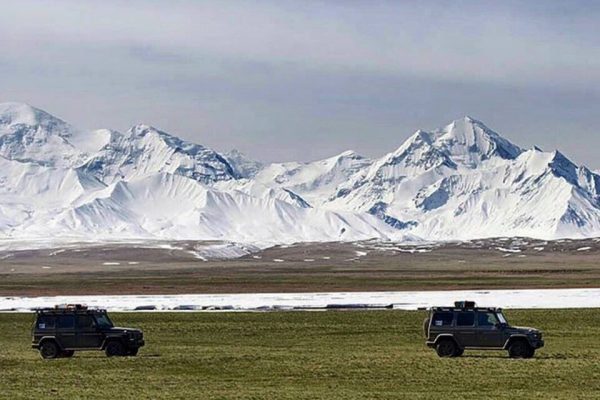
Private Transport — Mountain-Ready Vehicles All Hunza tours use private vehicles exclusively for your group. Vehicle type depends on group size: Toyota Prado or Land Cruiser for groups of 1–5, Hiace or Coaster for larger groups. All vehicles are 4×4 capable and driven by experienced mountain drivers who know the KKH, Khunjerab road, and every track in the valley.
Hotel Accommodation Guest house (economy), mid-range hotel, or luxury resort depending on your selected tier. Top Hunza hotels include Serena Hotel Hunza, Luxus Hunza, and the Hard Rock Hotel Hunza — all available on our luxury tier.
Urdu-Speaking Local Hunza Guide A dedicated local guide from Hunza accompanies your group throughout. Our guides have deep knowledge of Balti-Hunzai history, the Silk Route, Karakoram mountaineering, and the cultural significance of every site. They make the difference between seeing Baltit Fort and understanding it.
All Major Sightseeing Every destination listed in your itinerary covered by private vehicle and guide. No rushed schedules. No mixed groups.
24/7 Support Pakistan-based WhatsApp support throughout your trip. Road closure, weather delay, hotel issue — our team responds and arranges alternatives immediately.
✅ Additional by Tier
Standard (PKR 90,000+):
- Daily breakfast at hotel
- Better-located hotels in Karimabad (Hunza town)
Luxury (PKR 130,000+):
- Serena, Luxus, or Hard Rock Hotel
- Daily breakfast and dinner
- Premium 4×4 Land Cruiser
- Photography stops at optimised viewpoints
- Faster KKH route with fewer stops = more time in Hunza
❌ Not Included
- Flights to Gilgit (air packages excluded unless stated)
- Lunch (except luxury tier)
- Attabad Lake boat ride: PKR 400–500 per person
- Baltit Fort entry: PKR 600 per person
- Altit Fort entry: PKR 500 per person
- Khunjerab Pass entry: PKR 50 per person
- Naltar Valley: 4×4 hire PKR 12,000–15,000 (add-on)
- Travel insurance: PKR 2,500
7-Day Hunza Valley Tour Itinerary — from Islamabad
PKR 110,000 per person (group of 4) | Hotel + transport + guide included
Day 1 — Islamabad to Chilas via KKH Depart Islamabad at 6am in your private vehicle. Drive the Hazara Expressway through Abbottabad, Mansehra, and join the legendary Karakoram Highway at Havelian. The KKH National Highway N-35 was built jointly by Pakistan and China between 1959 and 1979, carved through some of the world’s most extreme terrain. Drive alongside the roaring Indus River through the deep Indus Gorge. Stop for lunch in Besham. Continue through Dasu, past the confluence of the Indus and Gilgit rivers, to Chilas. Overnight in Chilas hotel. Evening: Nanga Parbat viewpoint — the 8,126m mountain visible to the west from Chilas, its Diamir face rising directly from the valley floor.
Day 2 — Chilas to Karimabad (Hunza) via Gilgit Early departure. Drive through the famous Raikot Bridge where the Indus turns abruptly northward. Through Gilgit town — brief stop for fuel and breakfast. From Gilgit the landscape transforms as you enter the Hunza River valley wider, sunlit, apple orchards terracing the hillsides. Arrive Karimabad by early afternoon. Check in. First view of the Hunza panorama from your hotel terrace: Rakaposhi (7,788m) to the south, Ultar Sar (7,388m) directly above, and the ruins of Baltit Fort on the hill above town.
Day 3 — Baltit Fort, Altit Fort, Eagle’s Nest Morning: Baltit Fort Pakistan’s most impressive heritage restoration. The fort sits on a rocky outcrop above Karimabad and has commanded the Hunza Valley for over 700 years. The Aga Khan Cultural Service restoration transformed it into a world-class heritage museum. Explore its labyrinthine rooms, ancient dungeons, and royal chambers while your guide explains the history of the Hunzai Mir (kings). Entry fee: PKR 600.
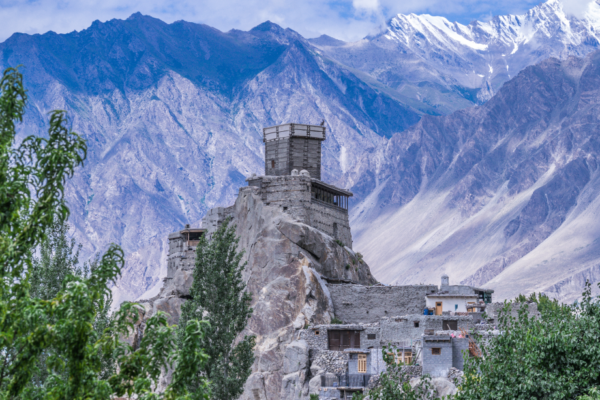
Altit Fort 2km from Karimabad, the oldest fort in Hunza (approximately 900 years old). Built on a cliff above the Hunza River, it offers the most dramatic views of any site in the valley. Entry fee: PKR 500.
Afternoon: Eagle’s Nest viewpoint — the iconic hilltop above Karimabad at 2,800 metres. On a clear day, the panorama encompasses Rakaposhi, Ultar, Diran, Lady Finger (Bublimotin), Golden Peak, and the full sweep of Hunza Valley. Sunrise from Eagle’s Nest is one of the great mountain photography moments in Pakistan.
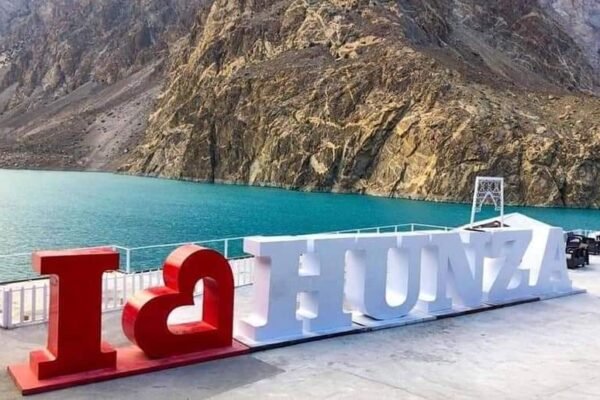
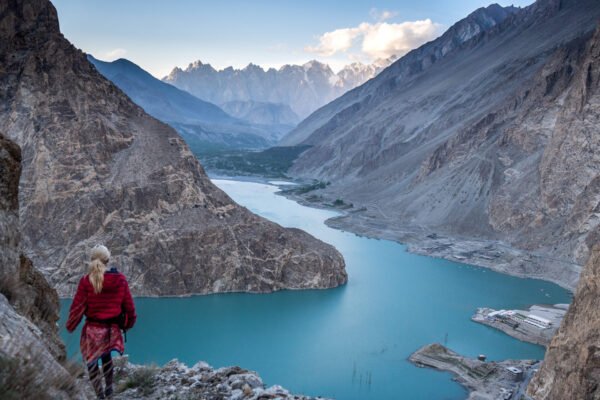
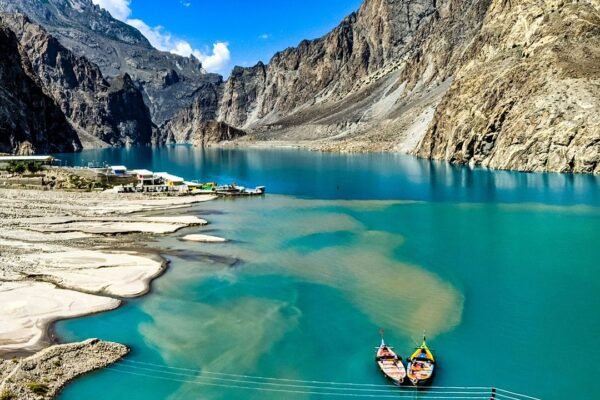
Day 4 — Attabad Lake + Passu Cones + Gulmit Drive 90 minutes west from Karimabad to the most photogenic section of the KKH. Attabad Lake — the brilliant turquoise lake created in January 2010 when a massive landslide dammed the Hunza River, submerging the village of Attabad and creating a 21km lake overnight. The colour of the water electric blue against the grey stone cliffs is extraordinary. Take a boat ride on Attabad Lake (PKR 400–500 per person, approximately 30 minutes) one of the best experiences in Hunza.
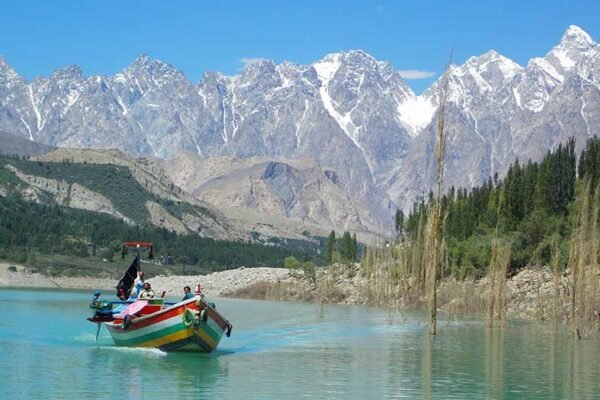
Continue to Passu — the village below the famous Passu Cones (also called Cathedral Peaks). These sharp rock spires rising directly behind the KKH are one of the most photographed natural formations in Pakistan.
Gulmit Village — a traditional Wakhi settlement with wooden architecture and an atmospheric bazaar. Nearby Hussaini Suspension Bridge (and the even more dramatic old Hussaini Bridge) hangs over the Hunza River considered one of the scariest pedestrian bridges in the world. Cross it if you dare.
Day 5 — Khunjerab Pass + Sost Border Town The day most Hunza visitors describe as the highlight of the entire trip. Drive from Passu to Khunjerab Pass — the 4,693-metre mountain pass on the Pakistan-China border and the highest paved international border crossing in the world. The 2.5-hour drive from the valley floor climbs through a series of extraordinary landscapes: desert valleys, yak pastures, alpine meadows, and eventually snow and rock at the summit. Khunjerab National Park protects Marco Polo sheep, snow leopards, wolves, and the Himalayan ibex along this route.
At the Khunjerab Pass: stand at the official Pakistan-China border marker. On a clear day, look into Xinjiang Province, China, across the Kunlun Mountains. Temperatures at the pass can be 15–20°C colder than Karimabad even in summer bring warm layers. Entry: PKR 50 per person.
Descent to Sost the Pakistani border town and the last settlement before China. A brief stop at the famous Sost Dry Port (central Asia trade centre on the Silk Route).
Return to your hotel in Karimabad or Gulmit.
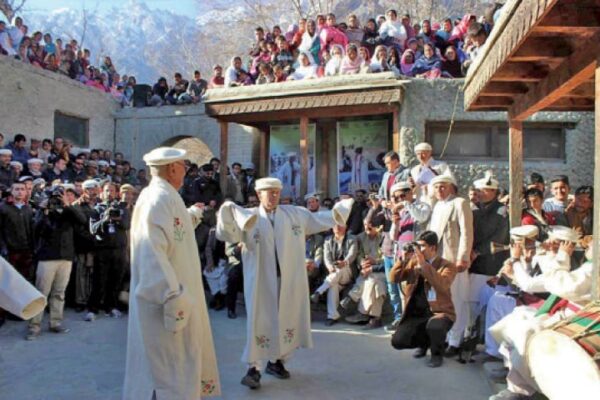
Day 6 — Karimabad, Duikar, Nasirabad Villages A gentler final day in Hunza. Morning: walk through Karimabad’s bazaar and fruit orchards. Buy Hunza dry fruits — apricots, mulberries, walnuts, and the famous Hunzai apricot oil. Visit a local Hunzai home for tea and traditional Hunzai bread (chapshuro) if your guide can arrange it — this is a deeply memorable cultural experience.
Duikar Village above Karimabad, with the best full-valley panoramic viewpoint. Worth the 30-minute drive for the complete Hunza landscape photograph.
Day 7 — Return to Islamabad Early departure. Drive the full KKH return 14–16 hours. Arrive Islamabad by late evening.
10-Day Hunza Tour Itinerary — from Lahore
PKR 135,000 per person (group of 4)
Day 1: Depart Lahore pre-dawn. Drive to Islamabad M-2 motorway then join KKH (or take morning flight to Islamabad and continue by road). Drive to Besham overnight.
Day 2: Besham to Chilas. Nanga Parbat viewpoint.
Day 3: Chilas to Karimabad via Gilgit. Arrival, check in, evening Karimabad orientation.
Days 4–8: Full Hunza sightseeing (same as 7-day Days 3–7 above plus Naltar Valley addition on Day 8).
Day 9: Hunza to Islamabad.
Day 10: Islamabad to Lahore.
The Seasons of Hunza — Which Should You Visit?
Hunza is extraordinary in every season but each one is completely different. Here is our honest season-by-season guide:
🌸 Cherry Blossom Season — Late March to Mid-April
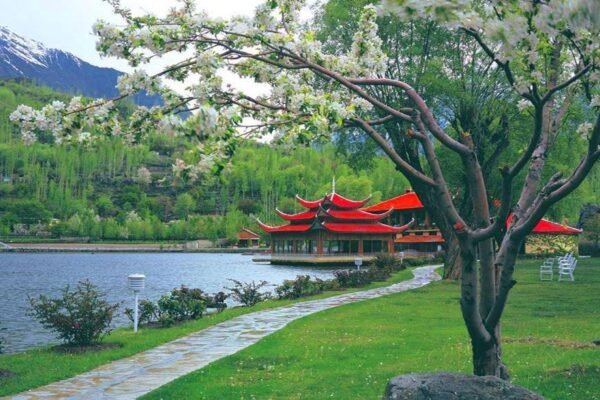
Hunza blossom season is arguably the most beautiful annual event in Pakistan. The valley transforms from bare winter branches to an explosion of white and pink as cherry, apricot, and almond trees bloom simultaneously across the terraced hillsides of Karimabad, Altit, and Ganesh.
The blossoms typically peak in late March at lower altitudes and continue through mid-April at higher villages. Karimabad’s orchards in full blossom with Rakaposhi in the background — snow still on the peaks, flowers carpeting the terraces is one of the most photographed landscapes in Pakistan.
Blossom package: 5 days from Islamabad PKR 95,000 per person (group of 4) Tip: Book 6–8 weeks ahead. This is Hunza’s most popular and fastest-selling season.
🏔 Summer Season — May to September
The main tourist season. All roads open including Khunjerab Pass and Naltar Valley. Green valleys, clear skies (most days), and comfortable temperatures in the valley (25–30°C). Summer is the best time for Khunjerab Pass, Borith Lake, and all outdoor activities.
Note: July and August see more cloud cover and occasional rain. June and September offer the most reliable clear days.
🍂 Autumn Foliage — October to Early November
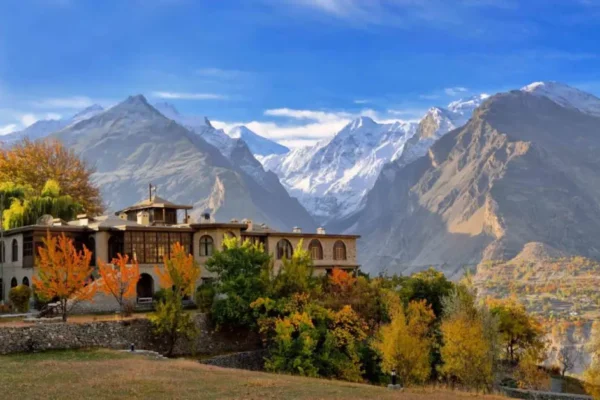
Hunza’s second major season and arguably more beautiful than blossom for photographers. The apricot trees turn gold, the poplar trees lining the irrigation channels become vivid yellow, and the hillside terraces shift from green to amber and red. The contrast of gold foliage against the white and grey Karakoram peaks is extraordinary.
Autumn also brings Hunza’s harvest season fresh apricots, apples, pears, and walnuts. Local families sell fruit by the roadside. The atmosphere is festive and the crowds are smaller than blossom season.
Autumn package: 6 days from Islamabad PKR 100,000 per person (group of 4) Peak foliage: Typically 15–30 October. Book 4–6 weeks in advance.
❄️ Winter Season — November to March
Hunza in winter is a different world and largely undiscovered. Snow blankets Karimabad and the surrounding peaks, the Hunza River slows, and the valley becomes extraordinarily peaceful. Hotels discount by 30–40%. The crowds disappear entirely.
The main limitations: Khunjerab Pass closes (October–April), Naltar Valley may be inaccessible, and some small roads close. But Attabad Lake, Baltit Fort, Altit Fort, Eagle’s Nest, and Karimabad are all accessible year-round.
Winter package: 5 days from Islamabad PKR 75,000 per person (group of 4)
Hunza’s Top Destinations — In Depth
Attabad Lake The Electric Blue Miracle
In January 2010, a catastrophic landslide blocked the Hunza River at the village of Attabad, killing 20 people, displacing 6,000 more, and creating a 21-kilometre artificial lake that submerged entire villages, farms, and a section of the Karakoram Highway. The Chinese government helped rebuild the KKH through five tunnels bored through the mountains above the lake.
Today Attabad Lake is the most visited attraction in Hunza. The water colour an extraordinary electric blue-green, deepest in late June when snowmelt peaks is unlike any natural lake in Pakistan. Boat rides take you past the half-submerged tops of former homes still visible beneath the surface. A haunting and beautiful place.
Boat ride: PKR 400–500 per person (30 minutes) Distance from Karimabad: 35km, approximately 45 minutes
Khunjerab Pass — Top of the World
At 4,693 metres above sea level, Khunjerab Pass is the highest paved international border crossing in the world and the gateway between Pakistan and China’s Xinjiang Province the same route traversed by Silk Route caravans for 2,000 years. The name “Khunjerab” means “river of blood” in the Wakhi language a reference to the historical raids that once threatened the route.
The 130km drive from Karimabad to Khunjerab rises through Khunjerab National Park — home to one of the world’s most significant populations of Marco Polo sheep, as well as snow leopards, wolves, Himalayan ibex, and golden eagles. The park is a UNESCO Biosphere Reserve.
At the summit, the Khunjerab Pass border gate marks the Pakistan-China frontier. On a clear summer day the views extend deep into both countries. In late June and July the pass is still partly snowbound and the contrast of the road cutting through snow under an intense blue sky is spectacular.
Season: Open May 1 – November 30 annually (approximate) Entry: PKR 50 per person for Khunjerab National Park
Baltit Fort — 700 Years Above Karimabad
Baltit Fort (Baltit Qila) is the most important historical monument in Hunza Valley and one of the finest heritage restoration projects in Pakistan. Originally built over 700 years ago by the ruling Mirs of Hunza, the fort was expanded and modified through the centuries as Hunza’s power grew. The last Mir of Hunza lived here until 1945 when he moved to a new palace below. The fort fell into disrepair until the Aga Khan Cultural Service undertook a 7-year restoration that was completed in 1996 and won multiple international heritage awards.
Today Baltit Fort is a world-class heritage museum with displays of royal artefacts, weapons, jewellery, and documents from Hunza’s history. The rooftop terrace provides one of the best views of Karimabad and Rakaposhi available anywhere.
Entry fee: PKR 600 per person Opening hours: 9am–6pm daily (closed some Fridays) Time needed: 1.5–2 hours
Altit Fort — Hunza’s Oldest Monument
Altit Fort predates Baltit by an estimated 200 years making it approximately 900 years old and the oldest monument in Hunza. Built on a sheer cliff above the Hunza River, the fort occupies one of the most dramatic positions of any historical structure in northern Pakistan. The cliff drop from the fort’s outer wall to the river below is over 1,000 feet.
Like Baltit, the Aga Khan Cultural Service has restored Altit Fort and the adjoining Altit village creating a heritage precinct that provides a window into traditional Hunzai architecture and life. The restoration of the Shikari Tower (a 3,000-year-old watchtower predating the fort) and the village wells is particularly impressive.
Entry fee: PKR 500 per person Distance from Karimabad: 2km (10 minutes)
Naltar Valley — The Valley of Coloured Lakes
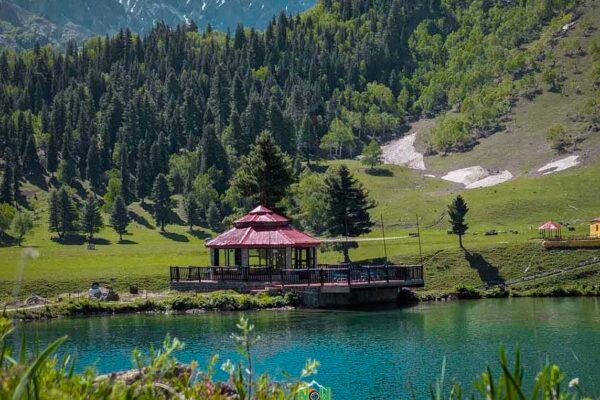
Naltar Valley is one of Hunza’s most spectacular yet lesser-known destinations and one that most generalist tour operators barely mention. Located 2 hours from Gilgit (4 hours from Karimabad), Naltar rises steeply through dense pine forest to an altitude of 3,500 metres where three high-altitude lakes sit in a glacial cirque: Naltar Lake (deep blue-green), Upper Naltar Lake, and the Red Lake (Sheosar Lake in Naltar). Pakistan Air Force operates a ski resort at Naltar in winter.
The road to Naltar requires a 4×4 vehicle we arrange this as an add-on (PKR 12,000–15,000 for a full-day return from Gilgit). Naltar is best combined with a Gilgit overnight on the return journey from Hunza.
Passu Cones — Cathedral Peaks of the Karakoram
The Passu Cones sometimes called the Cathedral Spires or Tupopdan are a row of needle-like rock towers rising directly behind the KKH above Passu village, approximately 115km northwest of Karimabad. These serrated rock spires, streaked with ice and snow, rise over 7,000 metres and are among the most photographed mountain formations in Pakistan.
The old Hussaini Suspension Bridge near Passu made of twisted wire and worn wooden planks suspended high above the Hunza River is one of Pakistan’s most adventurous crossings. Experienced travellers cross it; others photograph it from the bank. Both are entirely valid choices.
Hunza Honeymoon Package 2026
Hunza Valley is Pakistan’s most popular honeymoon destination for very good reasons: dramatic mountain scenery, intimate boutique hotels, cultural richness, and an atmosphere of complete peace. Eagle’s Nest at sunrise, Attabad Lake boat ride, a candlelit dinner with Rakaposhi views — Hunza delivers romance that no constructed resort can replicate.
Honeymoon Pricing
| Option | Duration | Accommodation | Price Per Couple |
|---|
| Classic Honeymoon | 5 Days | 3-Star Hotel in Karimabad | PKR 95,000 Per Couple |
| Premium Honeymoon | 6 Days | 2 Nights Serena Hunza + 3-Star Hotel | PKR 120,000 Per Couple |
| Luxury Honeymoon | 7 Days | Serena Hunza or Luxus Resort Throughout | PKR 175,000 Per Couple |
Honeymoon inclusions: Private vehicle (just the two of you), welcome flowers at hotel, Karimabad sunset dinner arrangement, Attabad Lake private boat ride, Eagle’s Nest sunrise, full Hunza sightseeing, 24/7 dedicated support.
Hunza vs Skardu Which Should You Visit?
| Factor | Hunza Valley | Skardu Valley |
|---|
| Drive from Islamabad | 14–16 Hours via KKH | 14–16 Hours via KKH or Babusar Pass |
| Flight Option | Gilgit Flight (50 Minutes) + 2 Hours Drive to Hunza | Direct Skardu Flight (55 Minutes) |
| Historical Sites | Baltit Fort, Altit Fort & Ancient Silk Route | Kharpocho Fort, Shigar Fort & Khaplu Palace |
| Most Iconic Attraction | Attabad Lake & Khunjerab Pass | Deosai National Park |
| Seasonal Highlights | Cherry Blossoms (Mar–Apr) & Autumn Colors (Oct–Nov) | Deosai Wildflowers (Jun–Sep) |
| Base for Trekking | Rakaposhi Base Camp & Passu Glacier | K2 Base Camp & Baltoro Glacier |
| Tourism Development | More Developed with More Hotels & Facilities | More Remote & Less Developed |
| Best For | First-Time Visitors, Honeymoon & Cultural Tourism | Adventure Travel, Trekking & Mountain Expeditions |
| Combine Both? | Yes Hunza + Skardu 12-Day Tour Package Available from PKR 175,000 Per Person |
Hunza Tour Packages from Islamabad
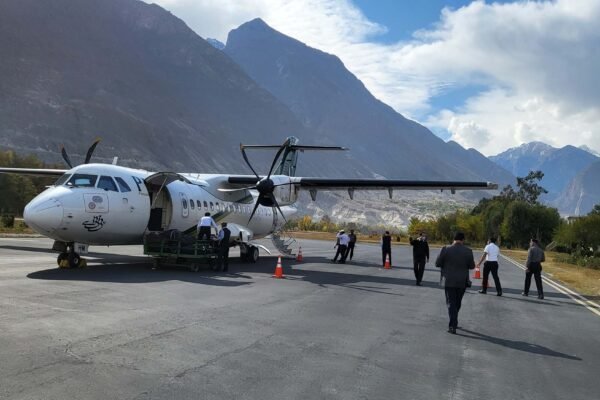
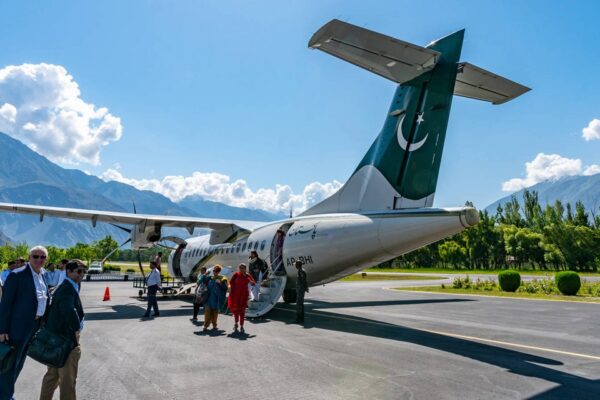
Islamabad is the most popular departure city for Hunza — the KKH begins effectively at Havelian, just 2 hours from Islamabad, and the PIA Gilgit route offers a quick 50-minute alternative.By road from Islamabad: PKR 110,000 (7 days) all-inclusive By air (Gilgit flight) from Islamabad: PKR 75,000 (4 days + airfare separate)
| Duration | Price Per Person | Route |
|---|
| 3 Days | PKR 65,000 | By Road via KKH |
| 5 Days | PKR 90,000 | By Road |
| 7 Days | PKR 110,000 | By Road |
| 4 Days by Air | PKR 75,000 | PIA Gilgit Flight + Road Transfer |
| 9 Days | PKR 120,000 | Road Tour + Naltar Valley Add-on |
→ Full Hunza packages from Islamabad
Hunza Tour Packages from Lahore
From Lahore, the journey to Hunza typically begins with a 4-hour Lahore–Islamabad drive before joining the KKH. Alternatively, Lahore–Islamabad flights (55 minutes) connect to the KKH same day.
| Duration | Price Per Person |
|---|
| 7 Days | PKR 118,000 |
| 10 Days | PKR 135,000 |
| 12 Days (Hunza + Skardu) | PKR 185,000 |
→ Full Hunza packages from Lahore
Hunza Tour Packages from Karachi
From Karachi, packages typically include a return flight Karachi–Islamabad, with the KKH journey starting from Islamabad.
| Duration | Price Per Person |
|---|
| 8 Days | PKR 135,000 |
| 11 Days | PKR 155,000 |
| 13 Days (Hunza + Skardu) | PKR 195,000 |
→ Full Hunza packages from Karachi
Hunza Valley Tour — Frequently Asked Questions
What is the price of a Hunza Valley tour package in 2026?
Packages start from PKR 45,500 per person (budget, group of 6+). Standard 7-day packages from Islamabad start from PKR 110,000 per person (group of 4). From Lahore: PKR 135,000. From Karachi: PKR 155,000. Honeymoon packages from PKR 95,000 per couple.
When is the Hunza cherry blossom season 2026?
Blossom typically peaks late March to mid-April. Apricot blossoms come first (mid-March), followed by cherry and almond. Book 6–8 weeks in advance — this is Hunza’s fastest-selling season.
Which is better — Hunza or Skardu?
Hunza for first-timers, cultural tourism, historical sites, and the blossom/autumn seasons. Skardu for adventure, trekking, K2, and Deosai. Best option: combine both on a 12-day tour.
How long does the drive from Islamabad to Hunza take?
Approximately 14–16 hours via the Karakoram Highway. Most tours break the journey with an overnight stop in Chilas or Besham. We depart at 6am and arrive in Karimabad by evening of Day 2.
Is Hunza Valley safe for families and women?
Yes — consistently ranked among Pakistan’s safest destinations. Almost zero crime against tourists. Hunzai hospitality is world-renowned. Female travellers visit regularly and safely.
What is the best Hunza hotel?
Top Hunza hotels: Serena Hotel Hunza (flagship luxury), Luxus Hunza (5-star, Karimabad), Hard Rock Hotel Hunza (boutique, Karimabad), Hotel Rakaposhi (excellent views, mid-range), Darbar Hotel (budget, Karimabad). We book your specific hotel tier at the time of reservation.
Can I go to Khunjerab Pass on my trip?
Yes — Khunjerab Pass (4,693m) is included in 5-day and longer packages. The pass is open approximately May 1 – November 30. In winter it is closed due to snow.
What should I pack for Hunza?
Warm layers for evenings and high-altitude days (Eagle’s Nest, Khunjerab), sunscreen (intense high-altitude UV), sunglasses, comfortable walking shoes, camera, and cash (limited ATM availability in Hunza — bring PKR from Islamabad). During blossom or autumn, also bring a wide-angle lens.
Book Your Hunza Valley Tour Package
📲 WhatsApp: 0300-920-6611 📞 Call: 0321-848-4087 📧 Email: info@pak-tours.com ⏰ Available 10am–10pm, 7 days a week
Our offices:
- Islamabad: 2nd Floor, Anaya Arcade, Sector F, DHA Phase 1
- Karachi: Office 04, Gulshan Iqbal Block 1
- Lahore: Mz 60 Ashiyana Center, Gulberg III
Explore more northern Pakistan: → Skardu Tour Packages → Hunza + Skardu Combined Tour → Naran Kaghan Tour Packages → Fairy Meadows Nanga Parbat Tours → Naltar Valley Tours
© 2026 Pak Tours | Govt Licence #9883 | Page last updated: May 2026